Welcome to North Macedonia — a small country with a big story and even bigger spirit.
Now, if Macedonia had a dating profile, it would probably say: ‘Been through a lot, still standing, kind of Balkan, kind of fabulous.’
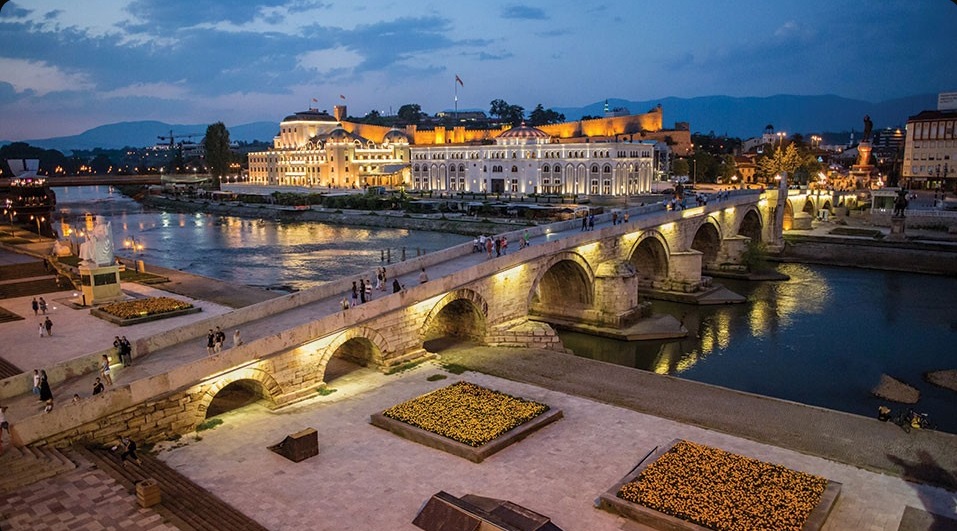
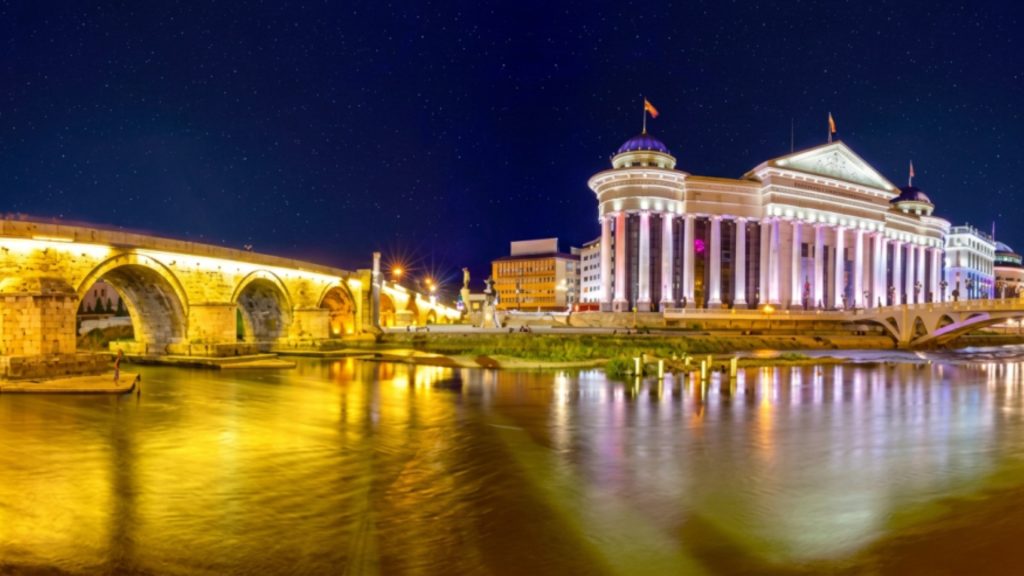
“Skopje’s Stone Bridge — connecting the old and new city for over 500 years.”
For centuries, Macedonia has been the ultimate Airbnb for empires — Romans checked in, Byzantines redecorated, the Ottomans overstayed, and Yugoslavia… well, let’s just say it was complicated. But guess what? After centuries of being passed around like a shared Netflix account, Macedonia is finally standing proudly on its own, buzzing with energy, culture, and a love for good coffee, good company, and unforgettable experiences.
The City
Skopje, the capital of North Macedonia, is a vibrant city that blends history, culture, and modern life. Nestled along the Vardar River and framed by the Vodno and Skopska Crna Gora mountains, it offers a unique mix of Ottoman, Byzantine, socialist-modernist, and contemporary architecture — sometimes all on the same street, which makes every walk feel like time travel with occasional plot twists.
The city has reinvented itself more than once. After a devastating earthquake in 1963, Skopje was rebuilt with help from around the world — the Japanese architect Kenzo Tange even designed part of the new city plan. That spirit of resilience is still part of Skopje’s DNA: this is a city that knows how to recover, rebuild, and then throw a party about it.
From the historic Old Bazaar and Kale Fortress to striking modernist buildings and lively café-lined boulevards, Skopje welcomes visitors with warmth and charm. It is also a city that loves statues so much, it might just have more statues than people. Don’t try to count them. People have tried. They’re still counting.
Key Facts
- Population: around 2 million in the country; roughly a third of it lives in and around Skopje
- Languages: Macedonian, Albanian, Serbian, Turkish, Bosnian, Romani, Aromanian — English is widely spoken in hotels, restaurants, and by anyone under 40
- Currency: Macedonian Denar (MKD). Cards are accepted almost everywhere, but keep some cash for the bazaar and taxis
- Time zone: CET (same as most of Europe)
- Coffee: Macedonians treat coffee like a religion. You don’t drink coffee here — you have a coffee ritual that lasts two hours, includes deep philosophy, and possibly gossip about six generations.
Key Spots in Skopje
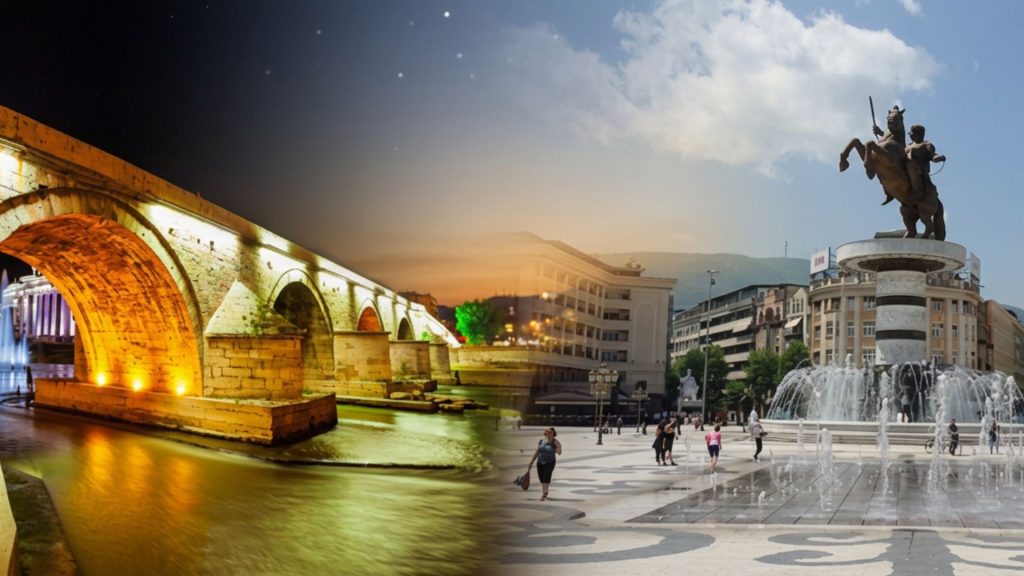
“The heart of the city, day and night.”
Stone Bridge — Dating back to the 15th century and built under Sultan Mehmed the Conqueror, the Stone Bridge is the symbol of Skopje and the literal link between the modern city center and the Old Bazaar. If you meet someone in Skopje, chances are you’ll meet them “at the bridge.”

“Skopje from the ramparts of Kale.”
Kale Fortress — Perched on a hill on the left bank of the Vardar, right in the city center, the fortress has watched over Skopje since the 6th century. The ramparts offer the best free panorama of the city — bring your camera and your best contemplative pose.
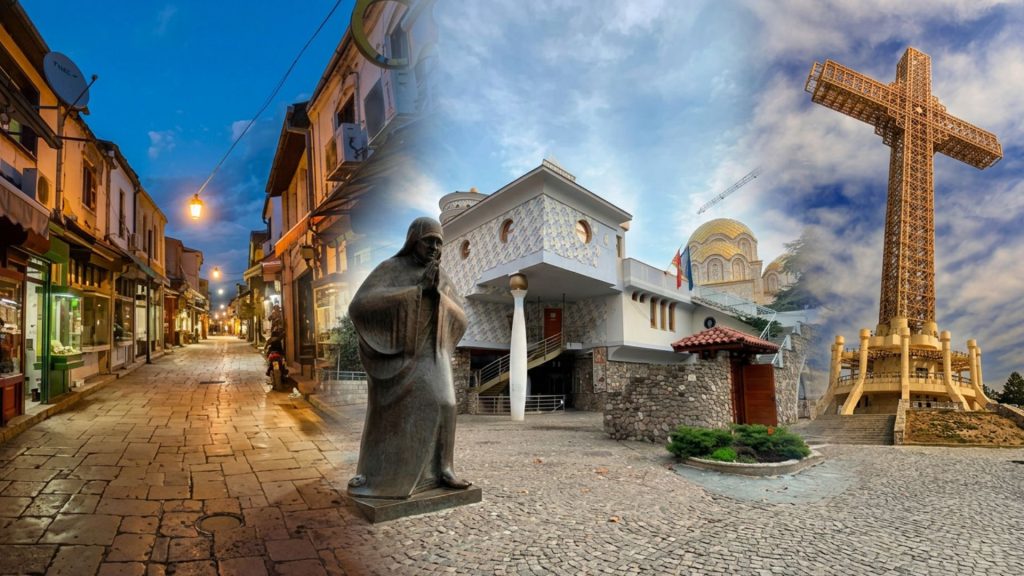
“The Old Bazaar — 800 years of trade, tea, and very good bargaining.”
Old Bazaar (Stara Čaršija) — Dating back to at least the 12th century, this is one of the largest and oldest marketplaces in the Balkans. Its cobbled streets are lined with artisan shops, mosques, hammams, inns, and museums — a living museum of Skopje’s multicultural heritage. Come for the history, stay for the filigree jewelry, handmade leather, and the best kebapi of your life.
Mother Teresa Memorial House — Did you know Mother Teresa was born in Skopje? The Memorial House, built on the site of the church where she was baptized in 1910, pays tribute to the city’s most famous daughter and Macedonia’s only Nobel Peace Prize laureate. It’s small, moving, and right in the city center.
Millennium Cross — Standing 66 meters tall atop Vodno Mountain, the Millennium Cross was built to commemorate 2,000 years of Christianity. It’s one of the tallest crosses in the world and visible from nearly every corner of the city. A cable car takes you up in about 10 minutes — the view is worth every second, and in clear December weather the snow-dusted panorama is spectacular.
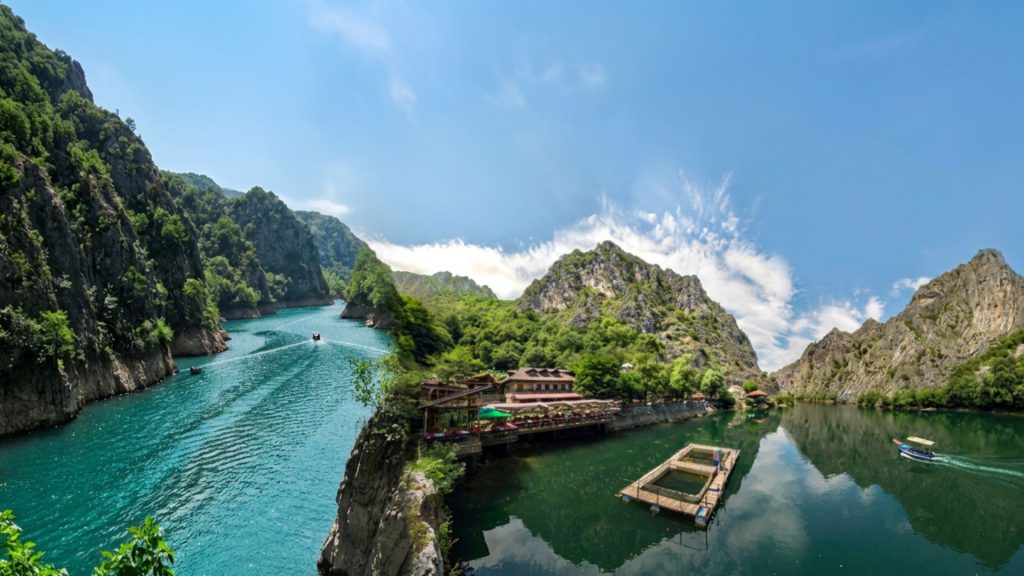
“Matka Canyon — 30 minutes from the city, a world away.”
Matka Canyon & Vrelo Cave — About 15 kilometers southwest of the city, Matka Canyon is one of North Macedonia’s most stunning outdoor destinations: dramatic cliffs, medieval monasteries, and a tranquil emerald lake. Nestled within the canyon is Vrelo Cave, a remarkable system of underwater and overwater chambers with striking stalactites — often listed among the world’s most fascinating caves. Boat trips run year-round, weather permitting. It’s the perfect half-day escape before or after the conference.
Debar Maalo — If Skopje had a heartbeat, it would be Debar Maalo. This legendary neighborhood isn’t just a place — it’s a lifestyle. Here, “going for lunch” is code for a multi-hour ritual of joy, laughter, and unapologetic indulgence. You don’t just sit in a kafana — you surrender to it. Traditional food sings, live music dances through the air, and rakija becomes your spiritual guide. In Debar Maalo, we don’t check the time — we check if the wine glass is full. Religion? Important. But kafana? Sacred!
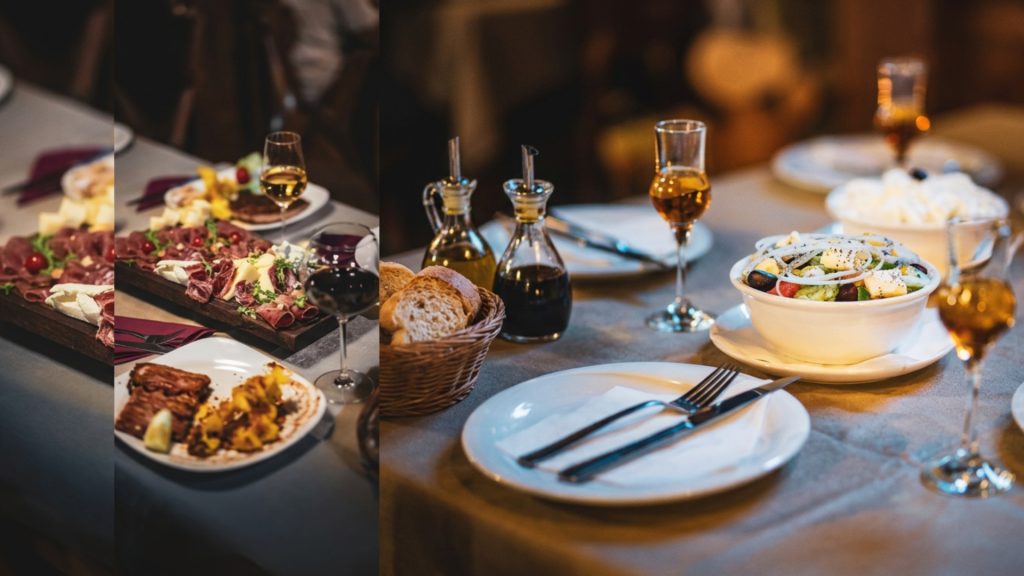
“Debar Maalo: where lunch has no end time.”
What to Eat (You Will Not Leave Hungry)
- Tavče gravče — the national dish: baked beans in a clay pot, humble and glorious
- Ajvar — roasted red pepper spread; every family insists theirs is the best (they are all correct)
- Kebapi — grilled minced-meat rolls, best eaten in the Old Bazaar with warm bread and raw onion
- Šopska salad — tomatoes, cucumbers, and a snowfall of white cheese
- Rakija — fruit brandy, served as a welcome, a farewell, and everything in between. Pace yourself. This is not a suggestion; it’s survival advice.
Visiting in May
The conference takes place on May 12–13, 2027 — arguably the best time of year to be in Skopje. Expect pleasant daytime temperatures around 18–25°C, mild evenings, and long, sunny days, with the occasional spring shower keeping things fresh. The city is at its most alive: café terraces are in full swing, the Old Bazaar buzzes late into the evening, Matka Canyon is lush and green, and hiking or taking the cable car up Vodno is a genuine pleasure. A light jacket for the evenings, comfortable shoes for cobblestones, sunglasses, and an appetite are the only essentials.
Getting Here & Around
- Skopje International Airport (SKP) is about 20 km from the city center — roughly 25–30 minutes by taxi or airport shuttle
- Taxis are inexpensive by European standards; ask your hotel to call a licensed one or use a local ride app
- The city center is walkable — the Stone Bridge, Old Bazaar, Macedonia Square, and Debar Maalo are all within a 20-minute stroll of each other
- The conference venue, DoubleTree by Hilton (Blvd. ASNOM no. 17), is a short taxi ride from the center
A Tiny Phrasebook
- Zdravo (ZDRAH-voh) — Hello
- Blagodaram / Fala (blah-GOH-dah-ram / FAH-lah) — Thank you
- Na zdravje! (nah ZDRAHV-yeh) — Cheers! (You will use this one a lot.)
- Kade e kafeanata? — Where is the kafana? (The only question that truly matters.)
Emergency Contact Numbers
- Ambulance: 194
- Police: 192
- Fire Brigade: 193 (we had to put this one in bold spirit — it is a fire safety conference, after all)
- European emergency number: 112 also works
See you in Skopje — May 12–13, 2027